Have you ever seen the word “censure” in a text, social media post, or even in the news and wondered what it really means?
I know the feeling—I remember the first time I came across it and got completely confused. You might think it’s just a fancy word or slang, but understanding it can actually help you communicate better and sound more confident.
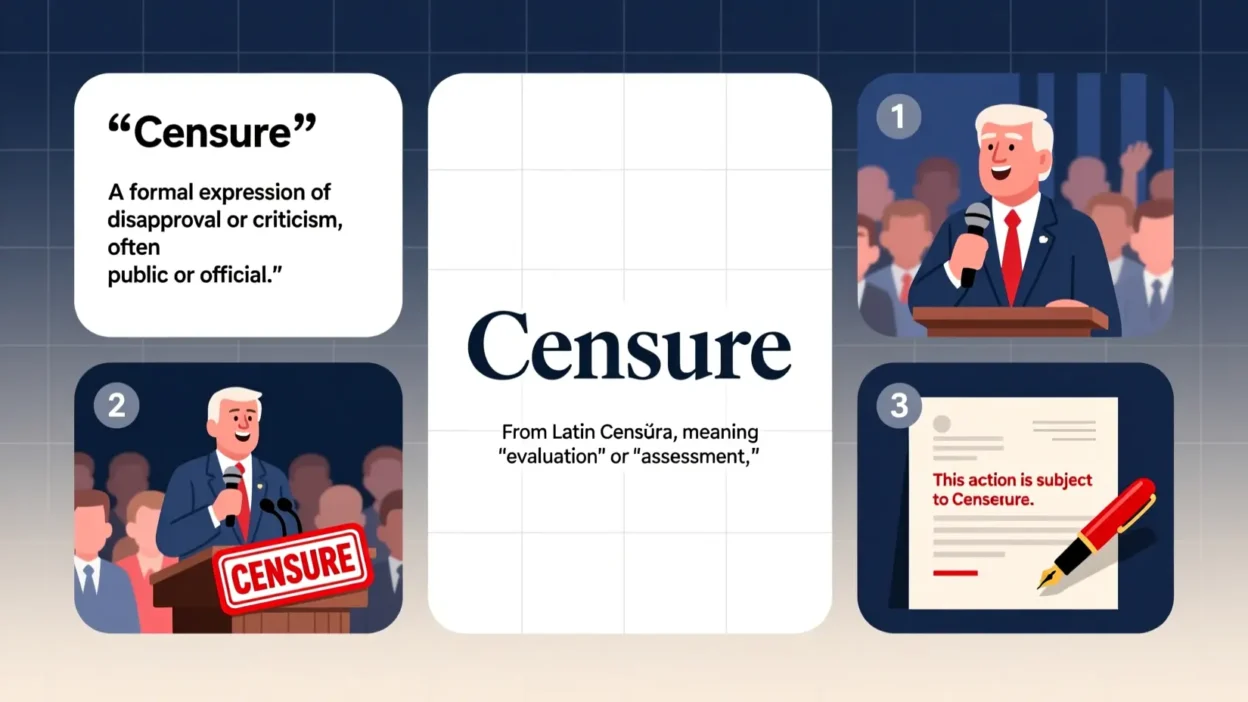
In simple words, censure is all about expressing strong disapproval, usually in a formal or serious way.
In this guide, I’ll break down exactly what it means, show you how it’s used in conversations, and give real-life examples so you’ll never be puzzled when you see it again.
🧠 What Does Censure Mean in Text?
In texting or online use, censure refers to official or strong disapproval, often by a group, community, organization, or authority. It’s not playful or casual — the word signals judgment, blame, or disciplined criticism.
✅ Example in a sentence:
“Did you see the board decided to censure him after the incident?”
In short: Censure = Strong formal criticism = Public disapproval.
📱 Where Is Censure Commonly Used?
You’ll most often see censure in more serious discussions rather than casual texting.
Here’s where it shows up most:
- 🏛 News headlines about politics or government
- 🧑💼 Workplace or organizational statements
- 📝 Discussion forums and debate groups
- 🗞 Twitter/X threads on public scandals
- 💬 Serious or argumentative chat exchanges
- 📚 Academic contexts
Tone level:
- ✅ Formal
- ✅ Serious
- ✅ Professional
- ❌ Not flirty
- ❌ Not casual slang
- ❌ Not playful
💬 Examples of Censure in Conversation
Here are realistic chat-style examples using simple texting tone:
A: bro what happened at the meeting?
B: they voted to censure him 😬
A: wow ppl are mad at the chairman
B: yeah he’s facing censure over it
A: Is that like firing??
B: no just public disapproval
A: twitter is wild today
B: another politician got censured 😂
A: Should we respond to that rumor?
B: no, there’s a risk of censure if we do
A: sounds serious
B: it is. it’s not a casual word lol
🕓 When to Use and When Not to Use Censure
✅ When to Use
- When referring to official criticism
- When discussing public accountability
- In professional or news-style contexts
- When describing disciplinary actions
- In serious debates or commentary
❌ When Not to Use
- In friendly chats with friends
- When joking or flirting
- When you mean “censor”
- In light, casual conversations
- When you want a soft or polite tone
Comparison Table
| Context | Example Phrase | Why It Works |
| Friend Chat | “that teacher might censure him” | Serious but understandable |
| Work Chat | “the committee plans to issue a censure statement” | Professional and formal |
| “this action may result in censure by the board” | Clear, official, properly toned |
🔄 Similar Slang Words or Alternatives
| Word / Term | Meaning | When to Use |
| Censor | To block or remove content | When content is hidden or filtered |
| Call out | Publicly criticize someone | Casual social media criticism |
| Reprimand | Official warning or correction | Workplace or disciplinary context |
| Condemn | Strong moral disapproval | Emotional or ethical criticism |
| Shame | Humiliate or embarrass publicly | Internet or social culture |
| Critique | Analyze or evaluate | Neutral or constructive feedback |
❓ FAQs About Censure
✅ Is “censure” the same as “censor”?
No — this is the most common confusion.
Censure = criticize.
Censor = suppress or block content.
✅ Is “censure” considered slang?
No, it isn’t slang. But it does appear in texting, political memes, online debates, and news-style conversations.
✅ Is censure the same as punishment?
Not exactly — it is public disapproval, not always removal or penalty.
✅ Can you use censure casually?
It sounds too heavy for casual chat, so it may feel dramatic unless the topic is serious.
✅ Does censure always involve a group vote?
Often, but not always — organizations, boards, governments, and committees commonly issue censures.