The first time I stumbled upon the word congruent in a text, I was totally confused. I thought maybe it was some new slang I hadn’t heard of, or perhaps a typo.
But turns out, it’s not just for math class people actually use it in social media and texting to describe things that “fit together” or are in agreement.
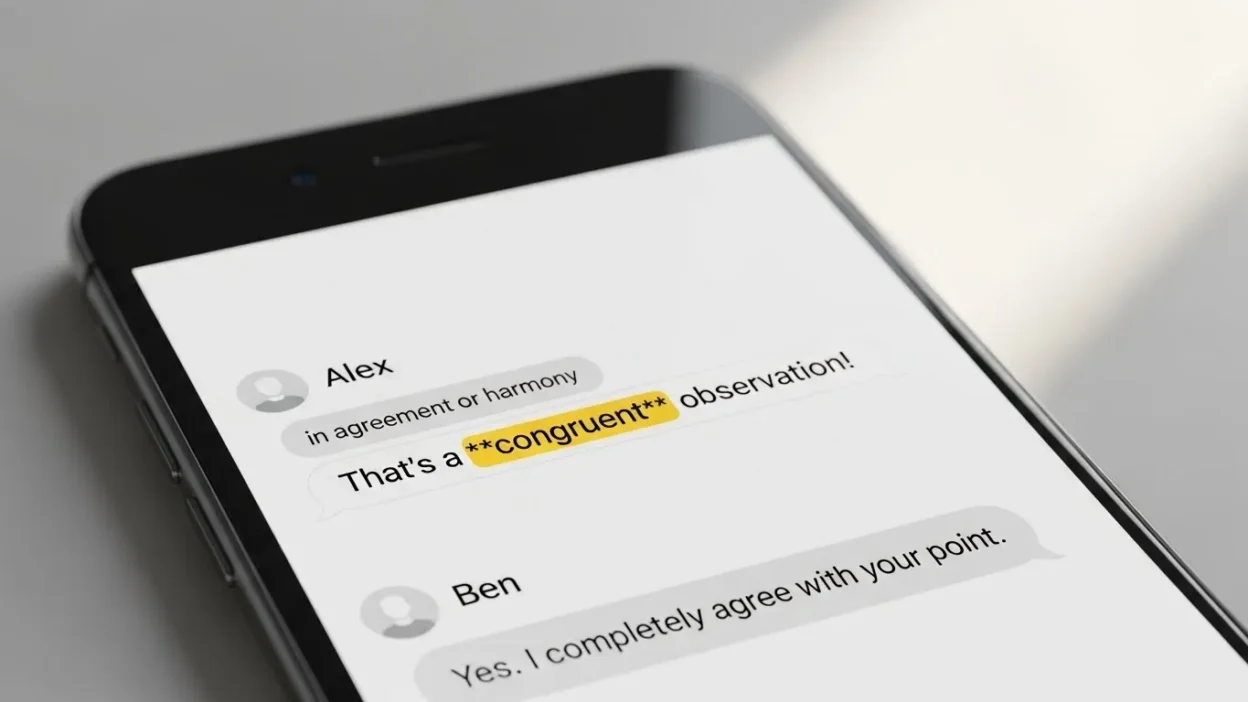
Quick Answer: Congruent means “in agreement or matching.”
It’s a friendly and thoughtful way of saying that something aligns well or makes sense with something else.
🧠 What Does Congruent Mean in Text?
In texting or social media, congruent is used to describe when ideas, actions, or even personalities match or are in harmony. It’s not a casual emoji-filled slang word but more of a thoughtful, reflective term.
Example Sentence:
A: “I love how your goals match your actions. Really congruent!”
B: “Thanks! That means a lot 😊”
In short: Congruent = in agreement = matching or aligning well
📱 Where Is Congruent Commonly Used?
Congruent isn’t your typical TikTok slang. Here’s where you might see it:
- ✅ Texting with friends or colleagues when discussing ideas or decisions
- ✅ LinkedIn or professional chats to compliment alignment or consistency
- ✅ Self-improvement or reflective posts often in captions or motivational quotes
Tone: Mostly formal-friendly or thoughtful. Rarely casual or flirty.
💬 Examples of Congruent in Conversation
Here are some realistic texting examples:
A: “Your values really match what you post online.”
B: “Yeah, I try to stay congruent with what I believe 🙏”
A: “Our team’s vision is totally aligned with our actions.”
B: “Exactly, it feels congruent and productive 💡”
A: “I like how your words and behavior are congruent.”
B: “Thanks! I think integrity is important 😄”
A: “Are your goals congruent with your plan?”
B: “Yep! Everything’s in sync 👍”
A: “Her style is congruent with her personality.”
B: “Totally, it feels authentic 🌟”
🕓 When to Use and When Not to Use Congruent
✅ When to Use:
- Friendly chats about alignment or agreement
- Professional discussions or team meetings
- Motivational or reflective posts
❌ When Not to Use:
- Urgent or emergency situations
- Casual memes or joking contexts
- Flirty or romantic conversations
Comparison Table:
| Context | Example Phrase | Why It Works |
| Friend Chat | “Your actions and words are congruent 😄” | Thoughtful & friendly |
| Work Chat | “This approach is congruent with our goals” | Professional & clear |
| “Your proposal is congruent with our strategy” | Formal & precise | |
| Social Media | “I love how congruent your lifestyle is with your values 🌟” | Inspirational & reflective |
🔄 Similar Slang Words or Alternatives
| Slang/Word | Meaning | When to Use |
| Aligned | Matches or fits well | Friend chats, work discussions |
| In Sync | Harmonious or coordinated | Casual, reflective conversations |
| Harmonious | Smoothly balanced or matching | Professional, social media |
| Consistent | Steady and reliable | Work emails, evaluations |
| Sympathetic | Understands or agrees with | Friendly or thoughtful chats |
❓ FAQs:
Q1: Is congruent casual slang?
No, it’s mostly thoughtful and formal-friendly. Not typically used in memes or flirty chats.
Q2: Can I use congruent with emojis?
Yes, emojis like 😊, 🌟, or 👍 can add warmth, but it still keeps a reflective tone.
Q3: Is congruent used in professional settings?
Absolutely. It’s often used in emails, meetings, or LinkedIn posts to show alignment or consistency.
Q4: Can congruent describe people?
Yes, it can describe personalities, values, or actions that align well with words or intentions.
Conclusion
Understanding congruent in text helps you express alignment, consistency, or harmony in both professional and personal conversations.
Whether complimenting a friend’s actions, describing a team’s synergy, or sharing a reflective post online, using congruent shows thoughtfulness and clarity.
Next time you see something that “fits perfectly,” you’ll know exactly what to say congruent!