Scrolling through texts or social media, you might stumble upon “PMO” and feel like everyone else is speaking a secret language.
At first, I thought it was some kind of typo or mysterious code! But after a little digging, the meaning becomes clear and it’s surprisingly simple.
Whether you’re chatting with friends or spotting it in online forums, understanding PMO will make your texting life way easier.
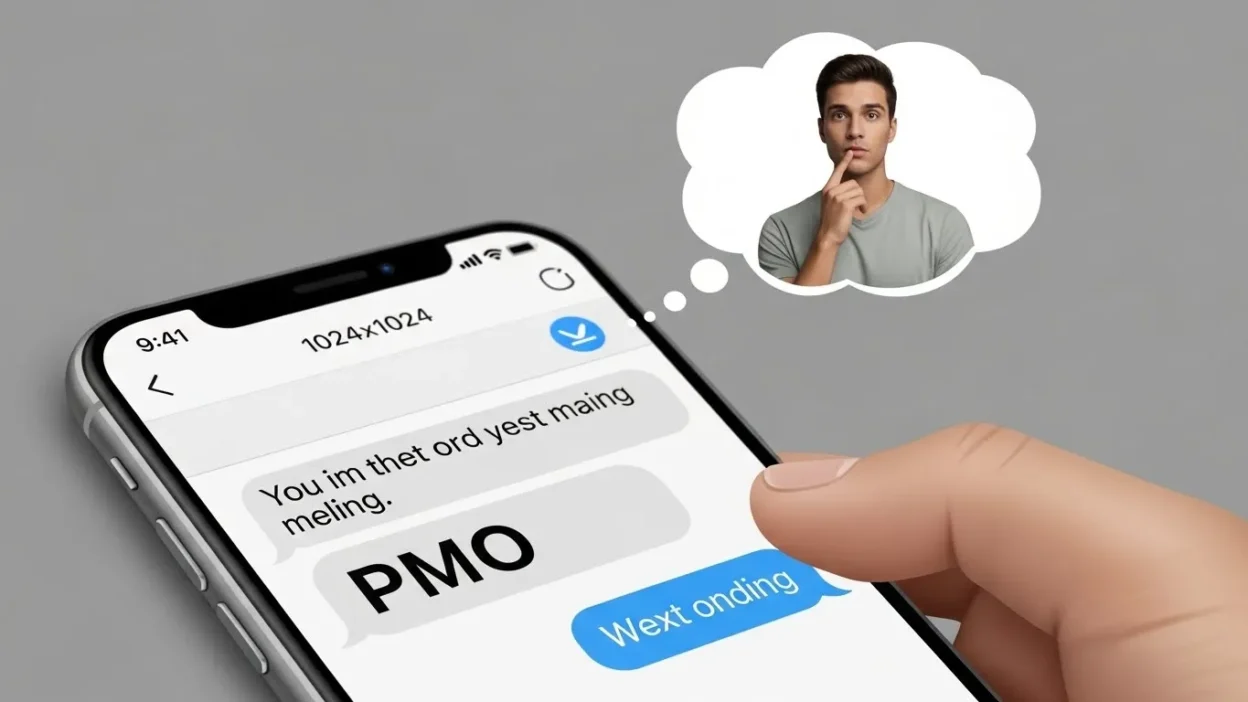
Quick Answer: PMO means “Private Message Only.” It’s a casual, friendly way of telling someone to reply privately instead of in a group chat or public post.
🧠 What Does PMO Mean in Text?
PMO = Private Message Only
In simple words, PMO is used when someone wants a conversation to happen in a direct or private chat instead of a public thread. It’s commonly used in social media, gaming groups, or group chats when the topic isn’t meant for everyone.
Example Sentence:
“Hey, can you PMO about the surprise party details?”
In short: PMO = Private Message Only = message me privately, not in the group.
📱 Where Is PMO Commonly Used?
PMO pops up in several digital spaces:
- Texting/Group Chats 💬 — casual conversation with friends
- Snapchat & Instagram DMs 📲 — private messages instead of public comments
- Gaming chats (Discord, Steam) 🎮 — coordinate strategy or share info privately
- Forums & Online Communities 🌐 — avoid posting sensitive info publicly
Tone: PMO is casual, friendly, and social-media–friendly. Avoid using it in formal emails or professional communication.
💬 Examples of PMO in Conversation
Here are some realistic texting examples:
Example 1:
A: “Did you see the group chat about the gift?”
B: “Yup, PMO about what I’m getting 😊”
Example 2:
A: “I have a question about the game strategy.”
B: “Sure, PMO me the details 🎮”
Example 3:
A: “Who’s bringing snacks for the party?”
B: “PMO so I can tell you privately 😅”
Example 4:
A: “I have the invite link.”
B: “Can you PMO it to me?”
Example 5:
A: “Are you free this weekend?”
B: “PMO, I’ll explain my plans 🗓️”
🕓 When to Use and When Not to Use PMO
✅ When to Use:
- Casual group chats with friends
- Social media posts needing private discussion
- Gaming chats
- Friendly online forums
❌ When Not to Use:
- Work or professional emails
- Urgent announcements
- Sensitive or official information
- Formal group communications
Comparison Table:
| Context | Example Phrase | Why It Works |
|---|---|---|
| Friend Chat | “No rush, PMO me later 😄” | Casual & friendly |
| Work Chat | “Please message me privately.” | Polite & professional |
| “Kindly send me the details privately.” | Formal & clear |
🔄 Similar Slang Words or Alternatives
| Slang | Meaning | When to Use |
|---|---|---|
| DM | Direct Message | Social media, casual chats |
| PM | Private Message | Friendly or professional |
| Inbox | Send me a private message | Casual & online forums |
| Chat | Let’s talk privately | Texting, group discussions |
FAQs :
Q1: Is PMO formal or casual?
A1: PMO is casual and friendly; avoid using it in formal settings.
Q2: Can PMO be used in emails?
A2: Technically yes, but it’s better to use “please message me privately” for professional emails.
Q3: Is PMO the same as DM?
A3: Almost! PMO emphasizes exclusivity in conversation, while DM is just a private message.
Q4: Can PMO be used in group chats?
A4: Yes, that’s exactly when it’s most useful—to redirect a chat privately.
Conclusion
PMO is a handy, casual way to keep conversations private in the digital world.
Whether you’re texting friends, chatting in gaming groups, or navigating social media, knowing when and how to use PMO helps keep messages organized and appropriate.
Next time you see PMO in a chat, you’ll know it simply means “let’s talk privately”—simple, friendly, and effective.